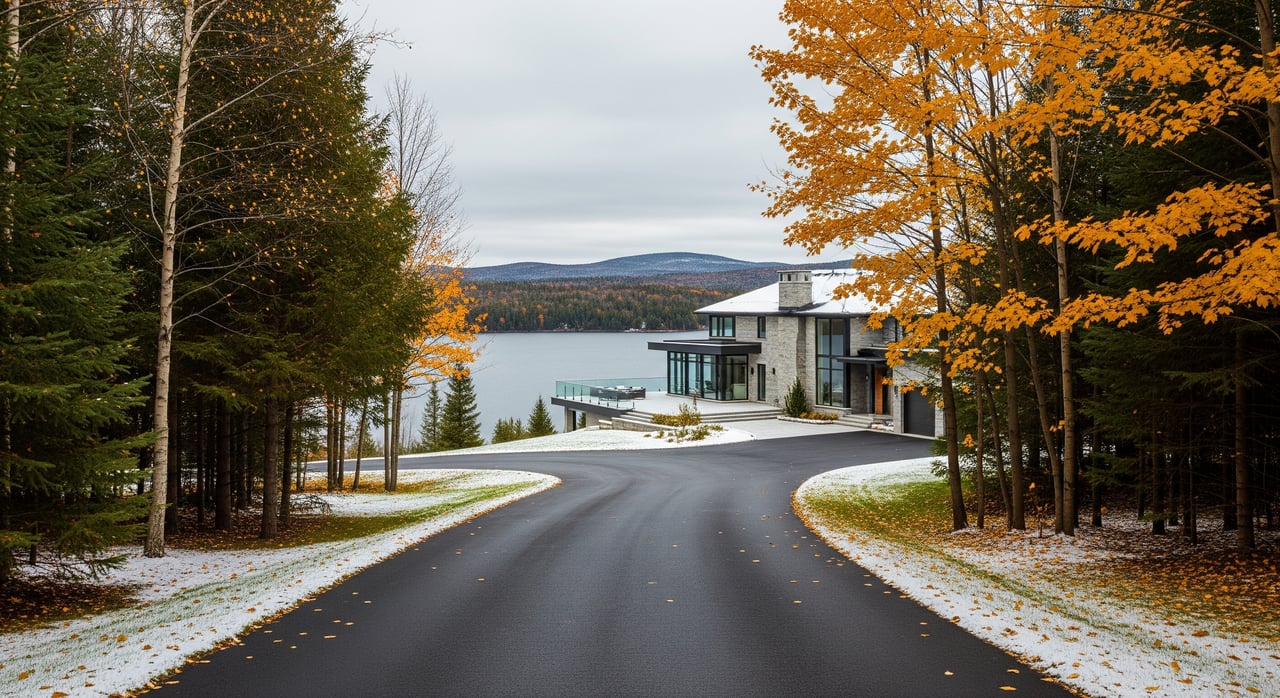
In Haliburton, the road to your cottage can be just as important as the cottage itself. If you are picturing cozy winter weekends or a seamless move, the type of road you buy on will shape your access, financing, insurance, and even resale. It can feel confusing at first, especially with terms like municipal, seasonal, unassumed, private, and easement. This guide breaks down what each road type means for you and gives you a clear checklist to follow before you make an offer. Let’s dive in.
Road types in Haliburton County
Municipal year-round roads
These are assumed municipal roads that the township or county maintains all year. Services typically include plowing, grading, and surface repairs. You will often see them on municipal base maps or noted in the property description. To confirm status, contact the municipal roads or works department.
Municipal seasonal or unassumed roads
Some municipal roads are maintained only in certain seasons. Others may be located within a municipal right of way but are not assumed for maintenance. Practices vary by township in Haliburton County. Verify with the municipal clerk or works supervisor whether a specific road is assumed and whether winter maintenance is provided.
Private roads and easements
Private roads are owned by individuals or groups and are not maintained by the municipality. They range from short lanes serving a few cottages to longer roads governed by a road association. Access may be granted by a registered easement or right of way. Only a title search or lawyer review will confirm whether an easement is properly registered.
Hybrid cases and allowances
In some cases, a municipally owned road is not maintained to winter standards unless upgrades are completed. Owners may petition for assumption once standards are met. Unopened municipal road allowances may also provide access but come with special rules that require due diligence.
What road type means for you
Access and winter reliability
- Four-season municipal roads usually allow reliable year-round access by a conventional vehicle.
- Seasonal or private roads may not be plowed in deep winter, which affects personal travel and deliveries.
- Some owners rely on snowmobiles, ATVs, tracked vehicles, or winter staging at a separate location when roads are not maintained.
Emergency response
- Fire and ambulance services need safe access. Seasonal or private roads can delay response times if conditions are poor.
- Contact local fire and EMS to understand access standards for your specific road.
Maintenance responsibilities and costs
- On assumed municipal roads, maintenance is funded through municipal taxes.
- On private roads, users share costs for plowing, grading, gravel, brushing, and culvert work. Request historical invoices and any reserve fund statements to understand true costs.
- Be prepared for special assessments if major work is needed.
Legal access and title
- A registered easement on title is the strongest form of legal road access.
- If you use a neighbor’s land without a registered easement, you face higher risk of disputes. Have a real estate lawyer review title and agreements.
- Some titles include covenants that require owners to participate in road maintenance.
Insurance, financing, and resale
- Insurers may require evidence of year-round access for certain coverages or may apply higher premiums where access is limited. Policies vary.
- Some lenders prefer or require year-round municipal access. Confirm requirements with your lender or mortgage broker early.
- Properties on private or seasonal roads can attract a narrower buyer pool, which can affect marketability and resale timelines.
Services and utilities
- Postal delivery, garbage collection, school bus routes, and some utilities may not be available on seasonal or private roads.
- Local building departments may ask for assurances about emergency access before granting certain permits or occupancy approvals.
Buyer due diligence checklist
Documents to request from the seller
- Current deed or title search confirming legal description and registered easements or covenants.
- Any road maintenance agreements, bylaws, or association rules.
- Road association meeting minutes, current and prior year budgets, financial statements, and reserve fund details.
- Recent invoices for plowing and maintenance and proof of payment.
- Written confirmation of winter access, such as a plowing schedule.
- Any municipal correspondence about road status, assumption petitions, or planned upgrades.
People and offices to contact
- Municipal clerk or roads department for the specific township in Haliburton County to confirm road assumption and winter maintenance.
- County of Haliburton roads department for County road questions.
- Local fire department or EMS dispatch for response capabilities and access requirements.
- Insurance broker to confirm coverage and any premium impacts.
- Mortgage lender or broker to confirm access requirements for approval.
- Real estate lawyer licensed in Ontario to review title and easements.
- Road association chair or treasurer to obtain bylaws, budgets, and contracts.
- Local planning or building department to discuss feasible upgrades and any path to municipal assumption.
Key title and agreement checks
- Confirm a registered easement or right of way that permits motor vehicle access.
- Identify any covenants that require road association membership or cost sharing.
- Review how costs are allocated, such as equal shares, frontage-based, or usage-based.
- Confirm whether obligations are registered on title or only informal.
Questions to ask at showings or in writing
- Is the road assumed by the municipality? If not, is there a petition or plan to assume it?
- Is winter plowing performed, by whom, and on what schedule? Are there written contracts?
- How are road costs calculated and collected? Is there a reserve fund? May I see the last three years of financials?
- Are utilities and postal services provided year-round? Are there workarounds in winter?
- Have there been recent disputes about access, unpaid fees, or maintenance liabilities?
Sample offer condition
- This offer is conditional on your lawyer reviewing and approving the title search, all registered easements or covenants relating to road access, and any road maintenance agreements or association bylaws, including evidence of funds and recent invoices.
Road associations 101
Governance models
- Informal: neighbors share costs without written agreements. Lowest certainty.
- Formal association: bylaws, voting, budgets, and defined obligations. Higher clarity.
- Single owner or company: one owner holds the road and bills others for maintenance.
Common financial setups
- Annual or monthly dues per lot, by frontage, or equal share.
- Special assessments for big-ticket repairs like culverts or regrading.
- Private contractors for plowing and grading with response times set in the contract.
Risks to watch
- No reserve fund can lead to sudden special assessments after storms or washouts.
- If membership is mandatory, non-payment by others can trigger collection actions.
- Informal setups raise the risk of disputes or uneven participation.
Best-practice requests
- Bylaws or maintenance agreements in writing.
- Current operating budget, last three years of budgets, and proof of reserve balances.
- The plowing or grading contract with response standards and liability terms.
- Records of any special assessments and how they were collected.
- Evidence of liability insurance for the common road, if applicable.
Real-world scenarios
Scenario A: Municipal four-season road
Straightforward for most lenders and insurers. Confirm with the municipal office that the road is assumed and maintained year-round.
Scenario B: Private road with an active association
Obtain bylaws, budgets, reserve details, and plowing contracts. Ask how special assessments are handled and review payment history and participation.
Scenario C: Access over an unregistered path
This is higher risk. Have your lawyer review title and consider requiring a formal, registered easement before closing.
How this affects resale
If you plan to sell in the future, road type will influence your buyer pool. Four-season municipal access tends to attract more buyers, simplify lending and insurance, and support wider marketing. Seasonal or private roads can still sell well, but they often require clear documentation, predictable costs, and extra education for buyers to feel confident.
Next steps
- Confirm the road’s official status with the township or County.
- Gather all road agreements, invoices, and association financials before you waive conditions.
- Speak with your insurer, lender, and lawyer early so there are no surprises at closing.
If you want a second set of eyes on a specific Haliburton property, reach out for local guidance and a clear plan. For tailored advice and access to curated listings across Haliburton’s lakes, connect with Greg McInnis. Get your free home valuation.
FAQs
What is a four-season road in Haliburton?
- It is an assumed municipal or County road that is maintained year-round, typically including winter plowing, grading, and surface repairs.
Can I get a mortgage on a cottage on a private road in Haliburton?
- Many lenders will consider it, but some prefer or require year-round municipal access, so confirm your lender’s policy early in the process.
How do seasonal or private roads affect insurance in Haliburton?
- Insurers may adjust coverage or premiums if winter access is limited; speak with a broker to confirm eligibility and any conditions.
What should I review before buying on a private road in Haliburton?
- Ask for registered easements, maintenance agreements, association bylaws, recent budgets, reserve fund details, and plowing invoices.
Can a private road be assumed by the municipality in Haliburton County?
- Sometimes, if owners upgrade the road to municipal standards and successfully petition; confirm feasibility with the local township.