Buying or selling a Haliburton cottage and wondering who really owns the strip of land between your lot and the lake? You are not alone. Shoreline road allowances can influence privacy, dock rights, financing, and resale value. In this guide, you will learn what a shoreline road allowance is, how it affects your plans, and the exact steps to confirm status before you make a move. Let’s dive in.
What is a shoreline road allowance?
A shoreline road allowance, often called an SRA, is a strip of land originally reserved along many Ontario shorelines for public access and potential road use. In some places it is municipally controlled, and in others it historically remained under Crown control. The width, location, and legal status vary by original survey and by lake.
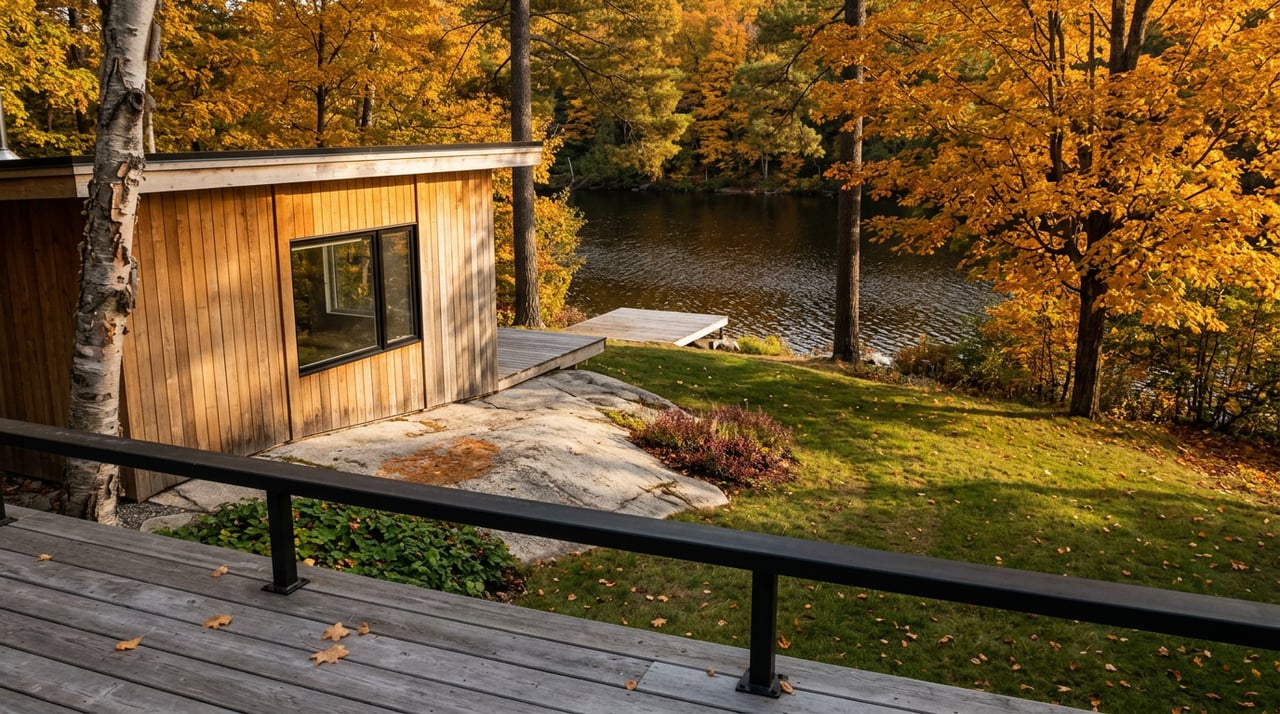
An SRA can lie between your cottage lot and the water. That means your deeded lot might end at the back edge of the allowance rather than at the shoreline. In Haliburton, you will see several common statuses: open and public, closed by by-law, closed and conveyed to the abutting owner, or unclear until researched.
How SRAs affect your ownership
Title boundaries and water access
If an SRA exists in front of your lot, your registered boundary may stop short of the water. Deeds often reference the high-water mark or old meander lines, and shorelines shift over time. The most reliable way to confirm your boundary is a current legal survey by a Licensed Ontario Land Surveyor and a review of the parcel register.
Docks and shoreline use
If the SRA remains public, municipalities often limit private docks or require permission to place or maintain one on the allowance. In some cases it is not permitted. If the SRA has been conveyed to you, private docks are more straightforward, still subject to municipal permits and any conservation or federal requirements.
Privacy and public access
Where a public SRA is open, people may have the right to traverse it or launch small watercraft. Even if it sees little traffic, that right can reduce privacy and affect how you use the immediate shore. It can also influence what you allow or manage for safety.
Financing, insurance, and resale
Lenders and title insurers look for clear, legal water access and defined boundaries. An unresolved SRA can complicate mortgage approvals or title insurance. Buyers expecting exclusive water frontage may discount value if a public allowance separates the lot from the lake. By contrast, a properly closed and conveyed SRA usually supports marketability.
Permits and regulators
Even when you own the foreshore, docks and shoreline work commonly require review. The municipality may require permits. A conservation authority or watershed body may oversee work near or below the high-water mark. The Ontario Ministry of Natural Resources and Forestry manages Crown interests, and the Department of Fisheries and Oceans reviews activities that may affect fish habitat.
Haliburton-specific oversight
Who to contact locally
Haliburton County is an upper-tier municipality. Most waterfront parcels fall within one of four lower-tier townships:
- Township of Algonquin Highlands
- Municipality of Dysart et al
- Township of Minden Hills
- Township of Highlands East
Start with the township planning or clerk’s office to ask whether a shore road allowance exists, whether it was closed by by-law, and whether any portion has been conveyed to a private owner. You can also ask about dock rules, permits, and any property file notes. County planning or land services may hold county-level records relevant to shore allowances on certain lakes.
If you are unsure which conservation authority applies to your lake, ask the township. They can direct you to the correct watershed body for permits and mapping.
How to confirm SRA status step by step
Use this checklist before you offer or list in Haliburton:
- Gather identifiers
- Obtain the municipal address, PIN, and legal description.
- Order title
- Have your lawyer or title searcher pull the parcel register and deed copies. Look for references to a shore road allowance, reserve, or exceptions.
- Commission a current survey
- Ask a Licensed Ontario Land Surveyor for a plan showing lot lines in relation to the shoreline and any allowance. This is the single most useful document.
- Request seller documents
- Collect prior surveys, deeds, municipal by-laws closing an SRA, and any dock or shoreline permits.
- Call the township
- Confirm if an SRA exists, whether it is closed or conveyed, and whether a private dock is permitted at that location. Request copies of any by-law and deed.
- Check county and conservation
- Ask Haliburton County if any related records exist. Identify the conservation authority, if applicable, and confirm shoreline rules.
- Confirm provincial or federal triggers
- Ask whether any Crown interests apply and if your proposed dock or shoreline work could require review under provincial or federal rules.
- Speak with your professionals
- Review findings with your real estate lawyer and surveyor. Ask your lender or title insurer whether SRA status affects financing or coverage.
- Pull the municipal property file
- Check for prior approvals, permits, or correspondence tied to the shoreline or a dock.
Buyer tips in Haliburton
- Verify, do not assume. Confirm whether your lot includes deeded waterfront. Visual inspection is not enough.
- Understand dock implications. If the SRA is public, private docks may be restricted or require permission.
- Price with precision. Adjust your offer to reflect privacy, use of the shore, and confidence in legal access.
- Budget for due diligence. Surveys, legal review, and potential municipal fees can add cost and time.
- Plan ahead for permits. Build timelines that include municipal and conservation authority reviews where applicable.
Seller tips for smoother closings
- Disclose what you know. Provide any survey, by-law closing an SRA, and conveyance documents early.
- Market accurately. If the deed does not include the foreshore, describe water access clearly to avoid disputes.
- Tidy up records. If there is a dock or shoreline structure, gather permits or approvals that show compliance.
- Consider proactive steps. Where practical, closing and conveying an SRA before listing can help marketability.
If you plan to close or buy an SRA
The typical path involves a municipal by-law to close the allowance, a survey by an OLS to create the parcel for transfer, and payment of municipal fees and purchase price where applicable. Your lawyer registers the deed on title. Timelines vary by township and complexity, often several months. Expect to cover surveying and legal costs as the applicant.
Common pitfalls to avoid
- Assuming you own to the water without a current survey.
- Installing or replacing a dock before verifying who owns the shore.
- Overlooking lender and title insurance requirements tied to SRA status.
- Forgetting to confirm conservation authority rules for shoreline work.
- Waiting until conditions are due to start the township file check.
Work with a local specialist
Shoreline road allowances are local and fact specific. A clear plan, accurate documents, and the right contacts can protect your enjoyment of the lake and the value of your property. If you want help confirming status, coordinating surveys, or positioning your cottage for sale, connect with Greg McInnis. You will get seasoned Haliburton advice and a clear path forward.
FAQs
What is a shoreline road allowance in Haliburton?
- It is a strip of land historically reserved along the shoreline for public access or potential road use, which can sit between your deeded lot and the water.
How does an SRA affect my dock plans?
- If the SRA is public, the township may restrict or require permission for private docks; if conveyed to you, docks are more straightforward but still need permits.
Will an SRA reduce my cottage’s value?
- It can, since some buyers prefer exclusive shore frontage; the impact depends on privacy, dock permissions, and local market expectations.
Who decides if an SRA can be sold?
- Typically the local municipal council controls closing and conveyance through a formal process and by-law; Crown interests, if any, are handled by provincial authorities.
How long does SRA closing and conveyance take?
- Timelines vary by township and complexity; expect several months and confirm current timing with the municipality.
What documents prove the SRA is mine?
- A registered deed conveying the allowance to you, plus the municipal by-law closing it and a current OLS survey tying the parcel to your lot.
Who enforces shoreline and dock rules in Haliburton?
- Primarily the township planning and building departments, conservation authorities where applicable, provincial agencies for Crown interests, and federal fisheries authorities for habitat impacts.