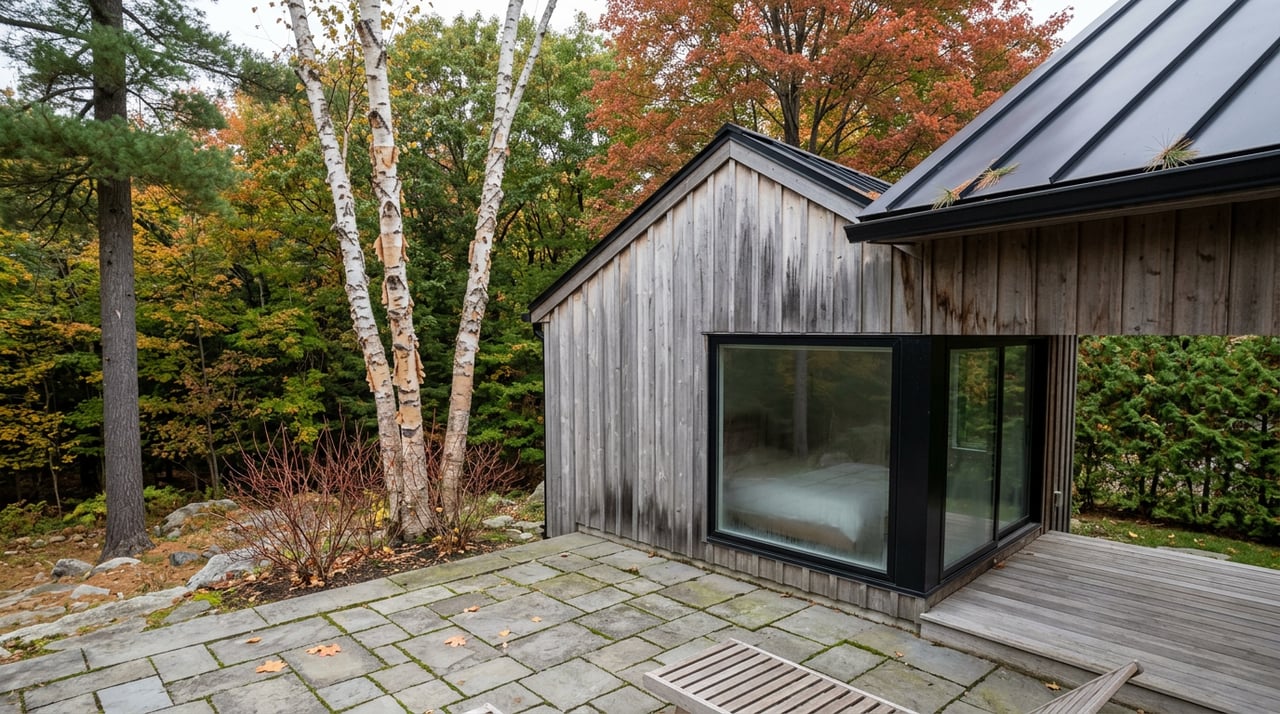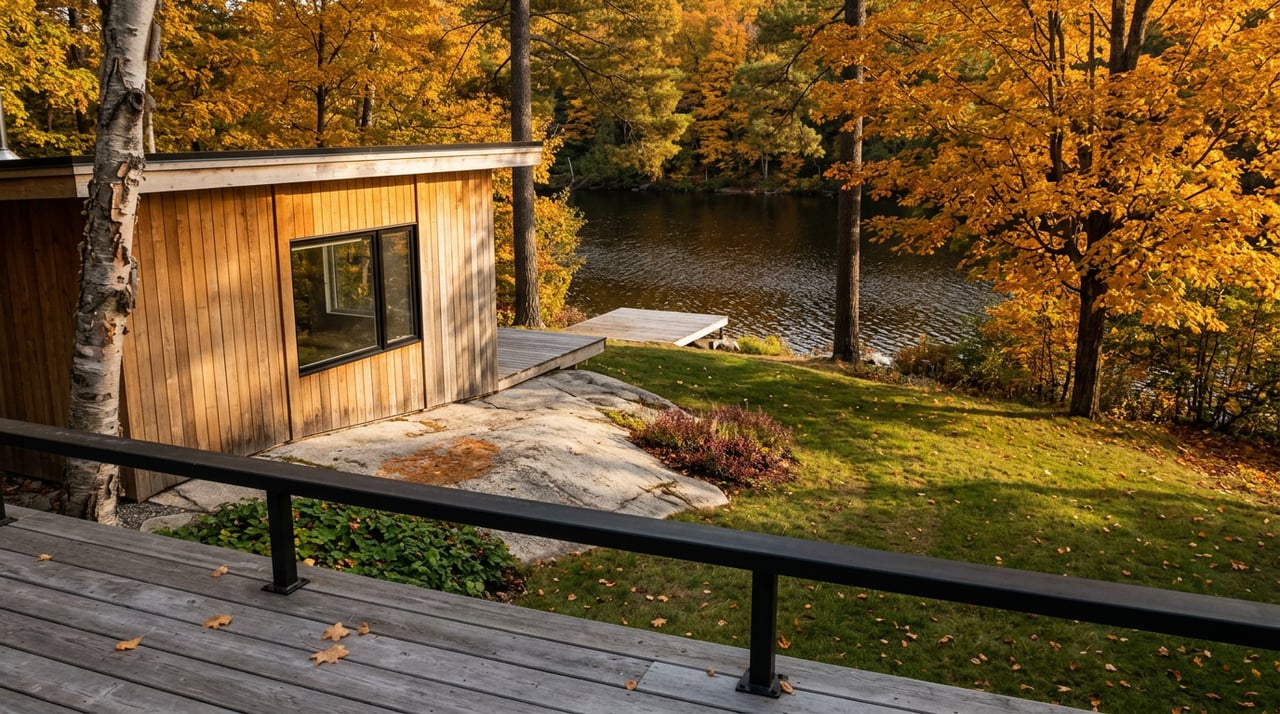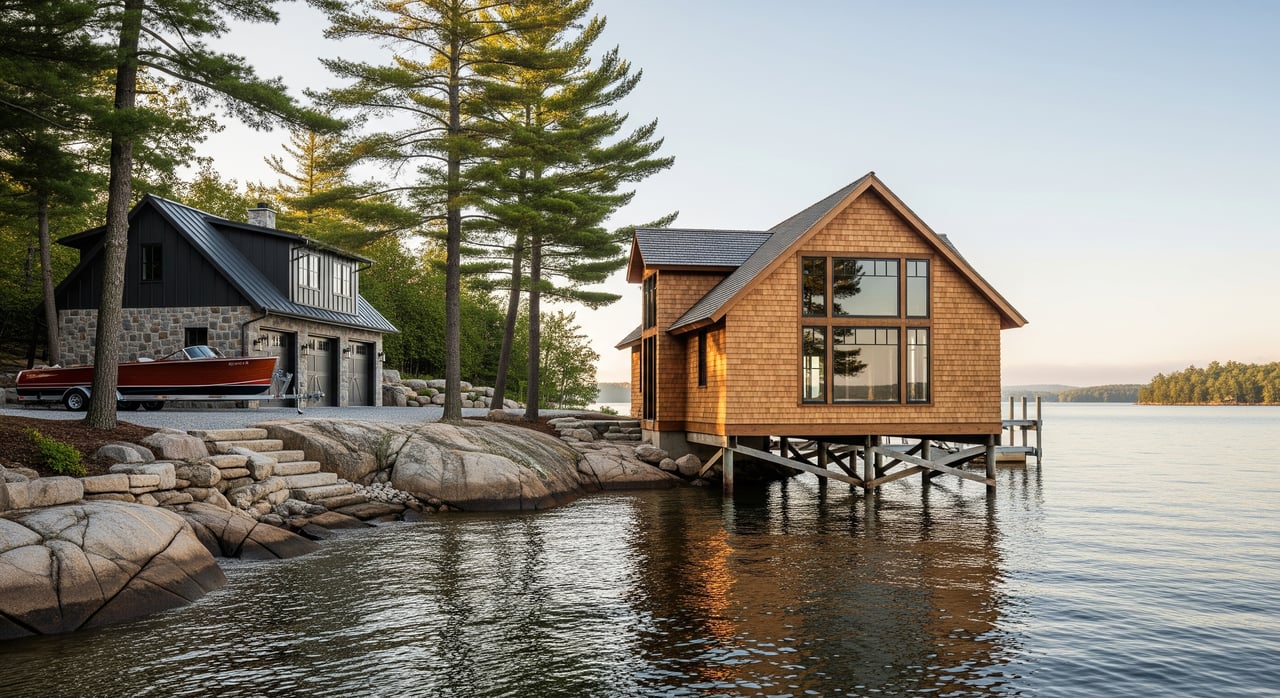
Should you build that classic Muskoka boathouse or keep it simple with a low-profile lift on shore? If you are weighing access, upkeep, permits, and resale, the choice can feel bigger than the boat itself. You want the right balance of lifestyle, protection, and long-term value for your shoreline. In this guide, you will learn the practical trade-offs, costs, and permit basics that matter in Muskoka. Let’s dive in.
Boathouse vs dryland storage at a glance
- Boathouse
- Best for quick, weather-protected access and a traditional cottage feel.
- Higher upfront cost and more ongoing maintenance.
- Prominent visual presence on the shoreline, often a focal point.
- Dryland storage and lifts
- Best for protection, lower maintenance, and flexibility over time.
- Lower upfront cost with simpler service routines.
- Minimal visual impact and easier to remove or upgrade.
Match the choice to your lifestyle
Frequency of use
If you boat often and want seamless access, a boathouse or a permanent lift offers fast, protected launching. If you use the boat occasionally or seasonally, dryland storage or marina storage can deliver strong protection with less day-to-day upkeep. Think about how many outings you realistically take each week.
Entertaining and shoreline look
Boathouses with decks can become social hubs, though many bylaws restrict any form of habitation or intensive recreation use. If you prefer a natural, low-profile shoreline, a lift and on-shore storage keep the focus on the water and the trees. Aesthetic preferences vary by lake and by neighborhood.
Boat size and access
Larger, heavier boats often benefit from engineered solutions like pile-supported slips or high-capacity hydraulic lifts. Smaller runabouts and personal watercraft are easy to manage on shore-mounted lifts, cradles, or trailers above the high-water mark. Consider wave action, water depth, and your dock layout before deciding.
Costs you can expect
Boathouse build ranges
- Simple open boathouse or sheltered slip: about CAD 40,000–120,000.
- Larger or enclosed boathouse with engineered piles and electrical: CAD 120,000–400,000+.
- Major cost drivers: foundation type, water depth, shoreline access, bedrock work, finishes, and permit conditions.
Lifts and dryland options
- Basic shore-mounted lift: CAD 5,000–15,000.
- High-end hydraulic or custom lift with covers and automation: CAD 15,000–40,000+.
- Cradles, racks, storage pads: CAD 2,000–15,000.
- Trailer and site prep: CAD 1,000–5,000+.
- Marina or off-site storage: seasonal rates vary by facility and demand.
Ongoing and hidden costs
- Lift service and maintenance: CAD 300–1,500+ annually.
- Boathouse repairs and insurance: variable; plan for periodic roof, decking, or pile work and possible insurance premium impacts.
- Permits and professional fees: CAD 2,000–15,000+ depending on engineering, surveys, and environmental studies.
- Winterization and seasonal takeout: budget for contractor or marina services.
Maintenance, durability, and insurance
Boathouse care
Expect roof and siding upkeep, inspections of piles or floats, structural fastener checks, sealing or painting, and pest control. The biggest threats are ice movement, wave action, and rot in timber elements. With proper construction and periodic renewal, core structures can last decades.
Lift and dryland service
Plan for winch or hydraulic servicing, cable or strap replacement, corrosion checks, and cradle or float inspections. In high-ice areas, you may remove or secure lift mechanisms seasonally. Many metal lifts run 10–25+ years with routine service.
Ice and liability
Ice is the primary hazard in Muskoka, creating significant loads on docks and structures. Both boathouses and lifts should be designed for local conditions and secured before freeze-up. Insurers may require inspections or endorsements, and boathouses can influence replacement values and liability coverage. Consult your insurance broker early.
Permits and approvals in Muskoka
Who approves what
- Local municipality: zoning, footprints, height, setbacks, and building permits for enclosed structures.
- District Municipality of Muskoka: shoreline policies and lot coverage.
- Ontario Ministry of Natural Resources and Forestry: work on Crown-owned beds below the high-water mark may need a Crown land work permit.
- Fisheries and Oceans Canada: projects that harm fish habitat can trigger federal review.
- Transport Canada: only when navigation could be affected.
- Watershed groups and lake associations: may provide shoreline guidance and be consulted.
Common rules and constraints
Location relative to the high-water mark drives what is permitted on shore versus in water. Many municipalities limit boathouse footprint and height and prohibit habitable water-based structures or plumbing. Expect to preserve natural shoreline vegetation, control erosion, and avoid altering fish habitat. Some permits require seasonal removal or securing of lifts.
Muskoka permitting steps
- Contact your local municipal building or shoreline department for zoning and an application checklist.
- Confirm shoreline and bed ownership, and the exact high-water mark. A survey may be required.
- Consult the MNRF if any part of the structure lies on Crown-owned bed.
- Screen for Fisheries Act triggers. Consider an environmental consultant if habitat may be affected.
- If shoreline alteration is significant, engage a shoreline or environmental consultant for drawings and mitigation plans.
- Prepare for municipal planning review, possible conservation input, and building permits where required.
Permit timelines can run weeks to months, especially if multiple reviews or federal screening are needed. Start early and build in seasonal constraints.
Resale and value impacts
Buyer perception
A permitted, well-built boathouse can be a standout amenity for buyers who want immediate, sheltered access and the classic Muskoka feel. Some buyers, however, prefer lower maintenance and a natural shoreline, which favors lifts or dryland solutions. Market preferences vary by lake and neighborhood.
Appraisal and documentation
Appraisers consider condition, compliance, and functional utility. Unpermitted or non-compliant structures can reduce marketability and complicate lending. Keep permits, drawings, maintenance records, and any inspection reports ready for buyers.
Future flexibility
Lifts and on-shore storage are easier to remove, upgrade, or reposition. Boathouses can carry grandfathered status or site-specific limits that affect future changes. Ask early about permit transferability and compliance.
Decision checklist
- What boat size do you own and how often do you use it?
- How long do you plan to own the property?
- What are your site conditions: depth, slope, bedrock, and ice movement?
- Is the shoreline or bed Crown-owned, and are there easements?
- What do municipal bylaws allow for size, setbacks, and use?
- What are the insurance implications and expected premiums?
- What is your full budget including permits, site prep, install, and maintenance?
- How important are aesthetics and a natural shoreline to you or likely future buyers?
When to bring in professionals
- Municipal planning and building department for rules and process.
- Qualified marine contractor with Muskoka experience.
- Licensed surveyor to confirm property lines and high-water mark.
- Structural or marine engineer for boathouses or engineered docks.
- Environmental consultant if fish habitat or shoreline alteration is likely.
- Insurance broker familiar with waterfront risks.
- Real estate agent or appraiser with waterfront specialization.
- Lawyer for title or Crown land questions and encroachments.
Choosing between a boathouse and dryland storage is not one-size-fits-all. Your best choice aligns daily use, site conditions, budget, and long-term plans with what local rules allow. If you want a grounded opinion on what will serve your shoreline and your resale goals, reach out to Greg McInnis for local guidance and a clear path forward.
FAQs
What is the key difference between a boathouse and a lift in Muskoka?
- A boathouse is a waterside structure that provides sheltered moorage and fast access, while a lift or dryland setup stores the boat out of water for protection and lower maintenance.
How much does a boathouse cost compared to a lift in Muskoka?
- A simple boathouse often runs about CAD 40,000–120,000, while engineered or enclosed versions can exceed CAD 120,000; a shore-mounted or hydraulic lift typically ranges from CAD 5,000–40,000+.
What permits are commonly needed for a Muskoka boathouse or lift?
- Expect municipal zoning and building permits, and possibly MNRF Crown land permissions and Fisheries and Oceans Canada review if fish habitat could be affected.
How does ice impact boathouses and lifts in Muskoka winters?
- Ice movement is the main hazard, so both options must be designed and secured for winter, and some lift components are removed seasonally to reduce damage risk.
Will a boathouse increase my property’s resale value in Muskoka?
- It can enhance appeal for buyers seeking sheltered access and a classic experience, but impact varies by lake, condition, compliance, and perceived maintenance or liability.