What makes Muskoka feel instantly recognizable? It is not just the cottages, the lakes, or the summer traffic heading north. It is the way landscape, boating, town life, and tradition all come together to create a lifestyle that feels both timeless and deeply tied to place. If you have ever wondered why Muskoka holds such a strong place in Ontario cottage culture, this guide will show you what gives it that iconic identity. Let’s dive in.
Muskoka Starts With the Landscape
Muskoka’s lifestyle begins with the setting itself. According to Destination Ontario, the region is one of Ontario’s best-known natural playgrounds and sits about three hours north of Toronto, making it a practical escape for many cottage owners and visitors.
The scale of the area also shapes how people experience it. Ontario’s Muskoka River watershed advisory report says the region spans 5,100 square kilometres and includes more than 2,000 lakes, while Destination Ontario cites about 1,600 lakes. Either way, the takeaway is clear: water is everywhere, and it defines daily life.
That lake-rich geography supports a unique mix of permanent communities and seasonal living. The same Ontario report notes about 60,000 permanent residents and slightly more than 80,000 seasonal residents, which helps explain why Muskoka feels different in the warmer months. The region does not just host cottage season. In many ways, it is shaped by it.
The Big Three Shape the Image
When people picture Muskoka, they often picture the “Big Three”: Lake Muskoka, Lake Rosseau, and Lake Joseph. These lakes are closely tied to well-known communities like Bala, Port Carling, Rosseau, Windermere, and Minett.
That network matters because Muskoka is not defined by one resort town or one shoreline. It is a connected lake-and-town system where boating, dining, visiting, and cottaging all overlap. That creates a lifestyle that feels expansive, social, and closely linked to the water.
For buyers, this is part of the draw. You are not only choosing a property. You are stepping into a broader rhythm of lake access, marina culture, town stops, and long-established summer traditions.
Boathouses Are More Than Architecture
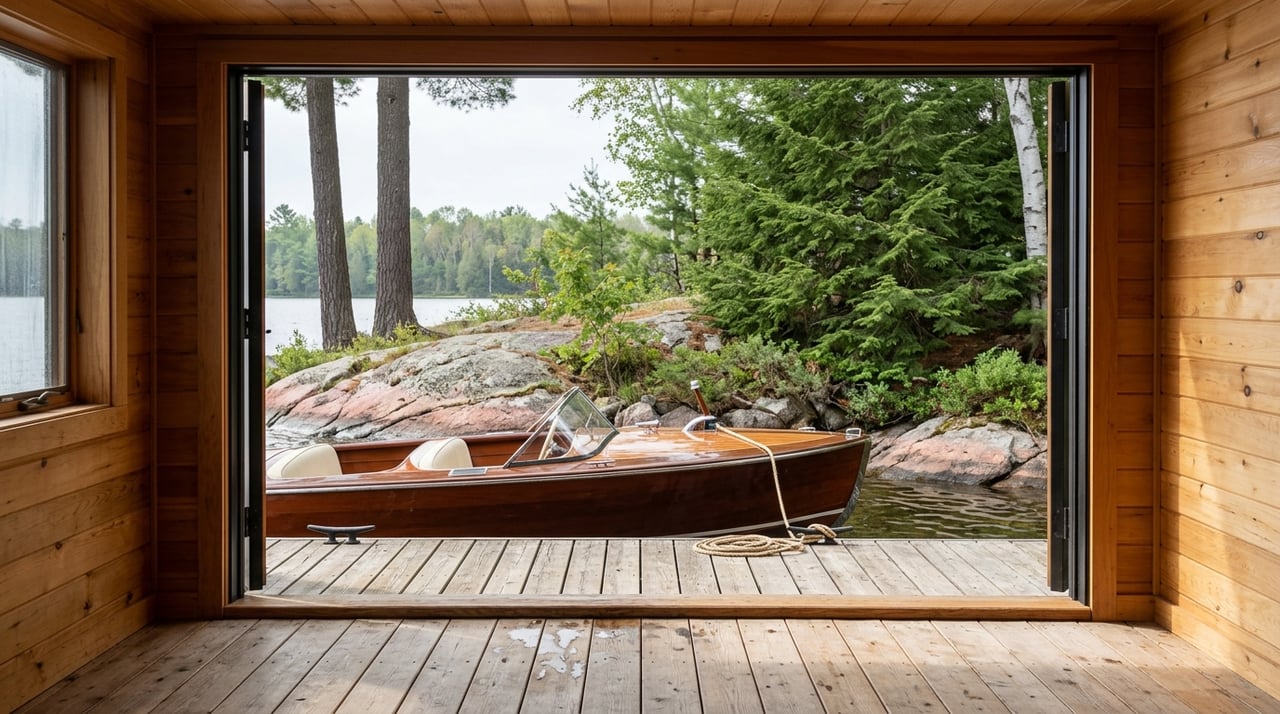
Few features say “Muskoka” quite like a classic boathouse. Ontario’s advisory report explains that stable summer water levels helped cottagers build boathouses to store wooden boats, and it states clearly that Muskoka’s boathouses are one of the things that make the region unique.
That is an important point because boathouses are not just attractive waterfront structures. They reflect how the region developed around water travel, summer use, and life at the shoreline. In Muskoka, the lakefront is not simply a view. It is part of how people move, gather, and spend time.
This is one reason Muskoka properties often carry a strong sense of legacy. Features tied to boating and waterfront use are not separate from the lifestyle. They are central to it.
Wooden Boats and Steamships Keep History Visible
Muskoka’s boating culture is not hidden away in old photographs. You can still see it on the water today. The Grace & Speed Boathouse in Gravenhurst is home to North America’s largest in-water collection of antique and classic boats, which speaks to how deeply wooden boat heritage is woven into the region’s identity.
Steamships are another major part of that story. Muskoka Steamships says the area’s steamship heritage dates back to 1866, and the R.M.S. Segwun, built in 1887, is North America’s oldest operating mail steamship. Today, the Segwun and Wenonah II still offer cruises across the Big Three lakes, keeping that tradition active rather than symbolic.
That continuity gives Muskoka a rare quality. In many places, lifestyle branding is built around nostalgia. In Muskoka, the history still feels lived in.
Boating Is Part of Everyday Life
Another reason the Muskoka cottage lifestyle feels iconic is that boating is not treated like a special occasion. It is part of how people experience the region on a regular basis.
The Township of Muskoka Lakes maintains docks, launches, and lake access points across areas including Bala, Port Carling, Windermere, Lake Muskoka, Lake Rosseau, and Lake Joseph. Public infrastructure like this helps support a strong boating culture across the region.
That matters because iconic places tend to have recognizable routines. In Muskoka, one of those routines is simple: get on the water. Whether that means heading into town by boat, cruising between lakes, or spending the afternoon near the dock, the boating lifestyle feels built into the region’s design.
Resort Culture Deepens the Experience
Muskoka’s identity is also shaped by its long-running resort culture. According to Destination Ontario’s Muskoka travel guide, the experience often includes canoeing, hiking, gourmet dining, golf, and evenings around the fire.
That wider rhythm matters because the cottage lifestyle here is not limited to private properties. It also includes hospitality, recreation, and traditions that have welcomed generations of guests and seasonal residents.
Several legacy properties help tell that story. Deerhurst Resort was founded in 1896 and was originally accessible only by steamship, according to Destination Ontario. The same source highlights Windermere House as a Victorian landmark on Lake Rosseau and notes that Sherwood Inn on Lake Joseph has welcomed guests since 1939.
Together, these places reinforce something important: Muskoka’s iconic status comes from a layered lifestyle. It is not only about owning a cottage. It is also about participating in a region with a long history of waterfront leisure and hospitality.
Town Stops Are Part of the Routine
One of the most appealing parts of Muskoka life is that going into town still feels like part of the cottage experience. The social rhythm often moves naturally between quiet waterfront time and small-town stops for lunch, supplies, or an evening out.
Destination Ontario points to places like Dock of the Bay overlooking Lake Muskoka, Crossroads in Rosseau, and café and tea-room stops in Bala and Gravenhurst as part of the region’s appeal. This kind of village-and-waterfront mix gives Muskoka a lifestyle that feels both relaxed and active.
In practical terms, this balance adds to the region’s staying power. A great cottage area usually offers more than natural beauty. It also gives you memorable places to return to on and off the water.
Events Give Muskoka Its Seasonal Rhythm
Iconic lifestyles are often built on ritual, and Muskoka has plenty of it. Seasonal events help turn the summer and fall calendar into a shared experience across the region.
Destination Ontario’s cranberry guide says the Bala Cranberry Festival has drawn millions of visitors since 1984. It also notes that the broader cranberry route connects shops, restaurants, breweries, and resorts, creating a wider regional experience.
Gravenhurst adds another layer through cultural venues and gathering places. Destination Ontario highlights the Opera House, which has been open since 1901, along with Muskoka Wharf’s boardwalk, dining, docking, and steamship departures. These are the kinds of places that give people a reason to return year after year.
Why Muskoka Feels Bigger Than a Destination
What truly makes the Muskoka cottage lifestyle iconic is the combination of private and public life. You have quiet mornings at the dock, afternoons on the lake, dinners in town, heritage cruises, and community events that mark the season.
That mix gives Muskoka a complete identity. It feels personal when you are at the cottage, but it also feels shared through the towns, resorts, launches, steamships, and traditions that shape the region. Very few places balance those two experiences so naturally.
For buyers and owners, that is part of the long-term value of Muskoka. You are not just investing in waterfront real estate. You are buying into a way of life with strong visual identity, lasting traditions, and a deep connection to the lakes.
If you are considering buying or selling cottage property in Muskoka, working with a team that understands both the market and the lifestyle can make all the difference. Greg McInnis offers knowledgeable, high-touch guidance across Ontario’s lake-country markets, with a clear understanding of what makes waterfront properties stand out.
FAQs
What makes the Muskoka cottage lifestyle different from other Ontario cottage areas?
- Muskoka stands out for its large lake network, historic boating culture, well-known towns, legacy resorts, and seasonal traditions that create a complete waterfront lifestyle.
Why are boathouses such an important part of Muskoka’s identity?
- Ontario’s watershed advisory report notes that Muskoka’s boathouses developed alongside stable summer water levels and wooden boat use, making them a lasting symbol of the region’s waterfront history.
What are the Big Three lakes in Muskoka?
- The Big Three are Lake Muskoka, Lake Rosseau, and Lake Joseph, which are closely connected to communities such as Bala, Port Carling, Rosseau, Windermere, and Minett.
Is boating central to everyday life in Muskoka?
- Yes. Public docks, launches, and access points across the region help make boating part of the normal rhythm of Muskoka life rather than just an occasional activity.
How do towns and events shape the Muskoka lifestyle?
- Town centers, waterfront dining, steamship departures, cultural venues, and annual events like the Bala Cranberry Festival help give Muskoka its social energy and seasonal traditions.